
Signs Your Furnace Needs Professional Repair: 10 Warnings

Table of Contents
How to Tell If Your Furnace Needs Professional Repair
Warning Signs Your Furnace Needs Professional Repair
Yellow or Lazy Burner Flames
Rising Energy Bills and Uneven Heating
Water Pooling or Leaks Around the Furnace
Common Furnace Problems Homeowners Overlook
Why Is Your Furnace Making Strange Noises?
Furnace Short Cycling: A Sign You Shouldn't Ignore
When to Call for Emergency Furnace Repair
What Happens During a Professional Furnace Diagnostic Visit
Repair or Replace? Making the Right Call for Your Furnace
Frequently Asked Questions
Last Updated: October 14, 2026
How to Tell If Your Furnace Needs Professional Repair
A furnace that rattles, short-cycles, or burns yellow is telling you something is wrong, and those are the clearest signs your furnace needs professional repair. This guide covers the ten signals that matter most, plus what a diagnostic visit involves and when to call for emergency service.
Some warnings are cosmetic. Others point to a cracked heat exchanger or a gas leak, and those can't wait until morning.
Our team has worked on heating systems across Westchester, Putnam, Dutchess, and Fairfield Counties. Here's how to sort a nuisance from a genuine failure, starting with the ones that carry real risk.
Warning Signs Your Furnace Needs Professional Repair
Ten warning signs point to a furnace that needs a technician, and they fall into three groups: safety issues, performance problems, and mechanical wear.
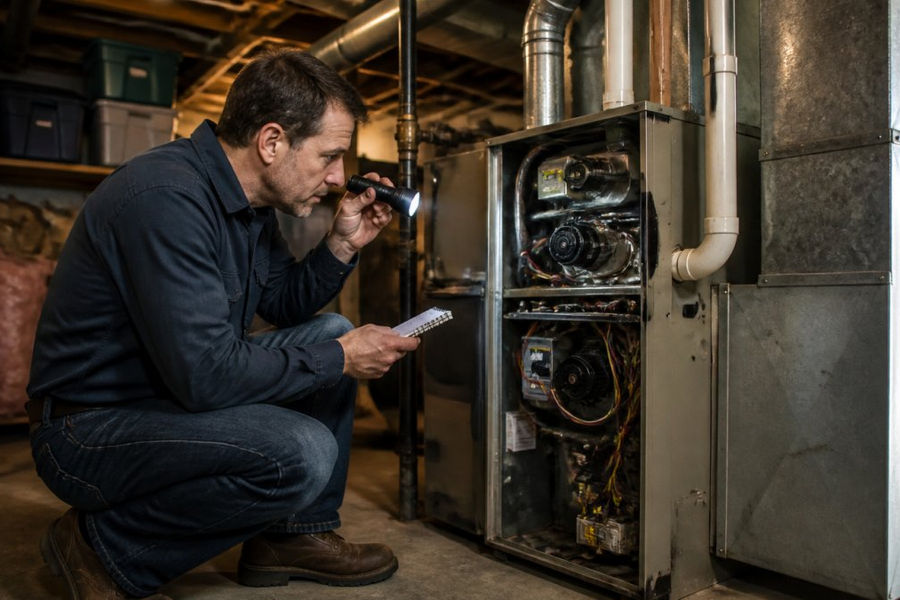
Safety issues (act now): a gas smell, a yellow or lazy flame, a carbon monoxide alarm sounding, soot around the burner compartment, or a flame that rolls out when the burner lights.
Performance problems (act this week): rising energy bills, uneven heating, cold rooms, or a furnace that runs constantly without warming the house.
Mechanical wear (act before it fails): banging, squealing, or rattling noises, water pooling near the unit, and frequent cycling on and off.
If you're unsure which group your symptom belongs to, treat it as the more urgent one. A technician can downgrade the diagnosis in person.
Yellow or Lazy Burner Flames
A healthy gas furnace burns a crisp blue flame. A yellow, orange, or flickering "lazy" flame means incomplete combustion, and incomplete combustion produces carbon monoxide.
A yellow flame isn't a cosmetic quirk or a sign the furnace is "running rich" the way an old carburetor might. It's a combustion problem, caused by dirty burners, blocked air intake, or a heat exchanger issue. Turn the furnace off at the thermostat, open a window, and call for service. If anyone has a headache, nausea, or dizziness, leave and call 911.
The U.S. Consumer Product Safety Commission guidance on carbon monoxide recommends a CO alarm on every level of the home and outside sleeping areas, and testing them monthly.
Rising Energy Bills and Uneven Heating
A furnace that costs more to run each month while heating the house less evenly is losing efficiency somewhere in the system. Common culprits include a clogged filter, a failing blower motor, leaking ductwork, or a burner no longer firing at full capacity. None fix themselves, and each gets more expensive the longer it runs.
Check the simple things first: replace a visibly gray filter and confirm every room's vents are open and unblocked. If bills still climb and upstairs rooms stay cold while downstairs rooms roast, the problem is inside the equipment or ductwork and needs a technician.
Water Pooling or Leaks Around the Furnace
Water around a furnace is never normal. A high-efficiency condensing furnace produces a little condensate, but it should leave through a drain line, not sit on your floor. Puddles usually mean a blocked or disconnected condensate line, a cracked drain pan, or a failed condensate pump. Left alone, standing water rusts the cabinet, damages the floor, and can short electrical components.
A standard furnace that suddenly leaks water points to a humidifier fault or a plumbing leak nearby. Either way, shut off power to the unit at the breaker, mop up what you can, and book a service call. Water and electrical components don't mix.
Common Furnace Problems Homeowners Overlook
The most overlooked furnace problems are the quiet ones: excess dust, a pilot light that goes out repeatedly, and a breaker that trips whenever the heat kicks on. None look dramatic, but all signal a system under strain.
Excess dust settling on furniture within a day or two of cleaning often traces back to a failing blower motor or a filter that's long past replacement.
Homeowners also miss the slow stuff. A furnace that takes longer to reach the set temperature each year, or needs the thermostat pushed a degree or two higher than last winter, is telling you the heat exchanger or burner assembly is losing capacity.
Why Is Your Furnace Making Strange Noises?
A furnace that bangs, squeals, or rattles is usually announcing a specific failed or failing part, and the sound tells you which one. Here's how to read the noise:
Noise | Likely Cause | Urgency |
Banging or booming | Delayed ignition, gas buildup | Emergency |
Squealing or screeching | Worn belt, dry blower bearings | Same week |
Rattling | Loose panels, failing blower motor | Same week |
Rumbling | Dirty burners, combustion issue | Same week |
Clicking at startup | Ignition or control board fault | Same week |
Banging deserves special attention. When burners don't light on the first try, gas accumulates, and the delayed ignition that follows produces that boom, a small explosion inside your equipment that can crack the heat exchanger over time. A common mistake is tightening every screw and calling it fixed. Loose panels rattle, sure, but if the noise persists after you've checked the obvious, the source is internal.
Furnace Short Cycling: A Sign You Shouldn't Ignore
Short cycling means your furnace turns on and off in rapid bursts instead of running a full heating cycle, and it's one of the most expensive problems to ignore. Every startup draws a power surge, so frequent cycling wears out the blower motor and igniter fast.
Oversized equipment is the classic cause. A furnace rated for a larger home heats the space too quickly, hits the thermostat setpoint, and shuts down before it finishes a proper cycle.
The fix depends on the cause, and that's the problem with guessing. If the filter is clean and the thermostat sits in a sensible spot, the diagnosis moves inside the cabinet, a job for someone with the right tools.
Watch Out Ignoring short cycling can cost you a blower motor or igniter replacement on top of the original repair. Catch it early and you're often looking at a filter change or a thermostat adjustment.
When to Call for Emergency Furnace Repair
Call for emergency furnace repair immediately if you smell gas, hear a carbon monoxide alarm, see a yellow or lazy flame, notice soot around the burner compartment, or have no heat during a hard freeze. Those situations don't wait for a weekday appointment and don't improve on their own.
Here's the safety drill for a suspected gas leak, in order:
Leave first. Get everyone, including pets, out of the house through a door you can open without touching electrical switches.
Don't touch anything electrical. No light switches, no garage door opener, no thermostat, no phone inside the house. A spark is all it takes.
Call from outside. Reach your gas utility's emergency line or 911 from a neighbor's phone or your cell once you're clear of the structure.
Don't re-enter until the utility or fire department says it's safe, even if the smell seems to fade.
Don't relight the pilot or reset the furnace to "see if it's still doing it." Every ignition attempt is another chance to ignite accumulated gas.
For carbon monoxide, the response is similar but the trigger is different. The U.S. Consumer Product Safety Commission guidance on carbon monoxide recommends a CO alarm on every level of the home and outside sleeping areas, tested monthly.
For everything else, a same-day or next-day call is usually fine. The U.S. Fire Administration home heating safety guidance notes that heating equipment fires spike in winter months, and gas odors are the one symptom you never investigate yourself.
Watch Out If you smell gas, don't test the furnace to "see if it's still doing it." Leave first, call from outside, and let a professional confirm the system is safe before anyone goes back in.
Pro Tip Keep your gas utility's emergency number saved in your phone before winter. When you actually need it, you won't want to be searching for it in the dark.
What Happens During a Professional Furnace Diagnostic Visit
A professional diagnostic visit is a structured inspection, not a quick glance at the flame. A technician works through combustion, airflow, electrical, and mechanical checks in sequence, and the results tell you what's actually wrong.
Expect roughly an hour of work, covering:
Combustion analysis: flame color, CO levels in the flue, and gas pressure at the manifold
Heat exchanger inspection: looking for cracks, corrosion, or soot that indicate leakage
Airflow checks: filter condition, blower operation, and static pressure across the system
Electrical testing: igniter, flame sensor, control board, and safety switches
Mechanical review: belts, bearings, inducer motor, and burner assembly condition
Ask for the readings, not just the verdict. A technician who shows you the CO number and the flame sensor microamp reading is giving you something to compare against next year. That's how you catch a slow decline before it becomes a mid-January failure.
This is also where a repair quote should come from. A diagnosis without measurements is a guess with a price tag attached.
Repair or Replace? Making the Right Call for Your Furnace
Repair usually wins when the furnace is under 15 years old, the fix is a single component, and the heat exchanger is intact.
Work through four questions in order:
1. How old is the system, and how hard has it worked? Most gas furnaces last 15 to 20 years with annual maintenance. A well-maintained 16-year-old unit in a mild climate may have years left; a 12-year-old unit repaired three times in two winters is closer to the end than the calendar suggests.
2. What does the repair actually cost relative to replacement? If a single repair costs more than a third of a new system, replacement deserves serious consideration, especially on an older furnace.
3. How often are you calling for service? One repair in five years is normal wear. Two or three repairs in two heating seasons is a pattern, and patterns tend to continue.
**4.
A cracked heat exchanger is the one answer that overrides all four questions. It's a carbon monoxide risk, and replacement is the only safe response.
Key Takeaway Repair if the furnace is young, the fix is minor, and this is an isolated breakdown. Replace if it's past 15 years, needs a major component, has become a repeat customer at your HVAC company, or has a cracked heat exchanger. When in doubt, get the diagnostic first and decide with the repair quote and the replacement quote side by side.
Pro Tip Ask your technician for both numbers before you commit: the cost to repair now, and the cost to replace. A shop that won't give you both is steering you, not advising you.
Frequently Asked Questions
What is the most common furnace problem?
The most common furnace problem is a dirty or clogged air filter, which restricts airflow and causes the system to overheat or short cycle. Other frequent issues include a faulty thermostat, worn blower motor, or ignition failure. Regular maintenance, such as changing filters every 1-3 months and scheduling annual inspections, can prevent many of these problems. If your furnace is not heating properly despite a clean filter, call a professional for a diagnostic visit.
When should I call a professional to repair my furnace?
Call a professional if you notice any of these signs: unusual noises like banging, rattling, or squealing; yellow or lazy burner flames instead of a crisp blue flame; a gas smell; water pooling around the unit; frequent cycling; or a sudden spike in energy bills. Also, if your furnace runs but doesn't heat your home, or if you see excess dust or soot, it's time for professional furnace repair. Ignoring these signs can lead to costly breakdowns or safety hazards.
Why is my furnace making strange noises?
Strange noises from your furnace often indicate mechanical issues. Banging or popping could mean delayed ignition or expanding ductwork. Rattling may be loose panels or a failing blower motor. Squealing typically points to a worn belt or motor bearing. These sounds should not be ignored; they often signal that components are failing and require professional attention. A technician can diagnose the exact cause and perform necessary repairs to prevent further damage.
What furnace problems require emergency service?
Emergency furnace repair is needed for any situation that poses a safety risk or leaves your home without heat in freezing temperatures. This includes smelling gas, suspected carbon monoxide leaks, a yellow or flickering pilot light, or a furnace that won't turn on at all. Also, if you see sparks, smell burning, or hear loud banging, shut off the system and call for emergency service immediately. Prompt action can prevent dangerous conditions and further damage.
Contact Us


Comments